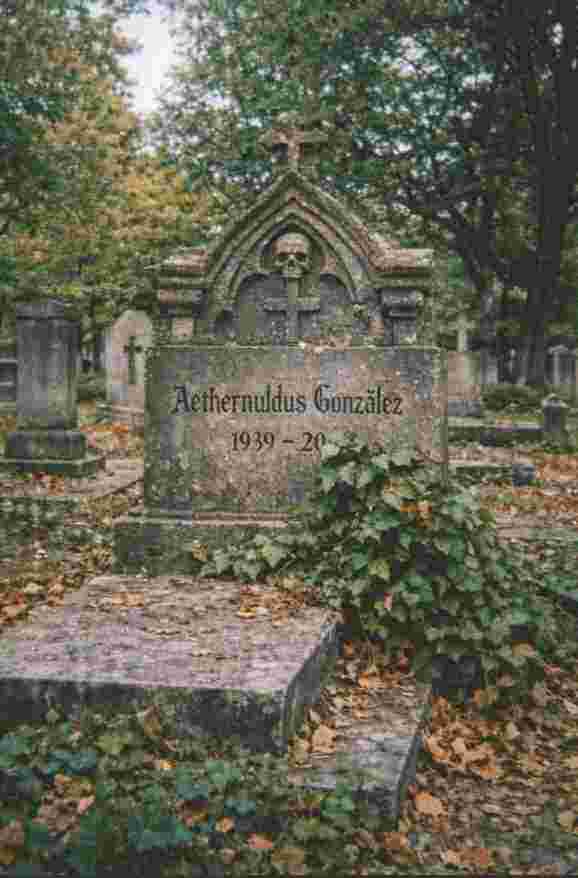
 (Best viewed with mystic candles)
About the Codex Gruitcurtensis
THE CODEX
What follows is my own attempt to describe the manuscript as I understand it so far. I am not a scholar, and much of this remains uncertain.
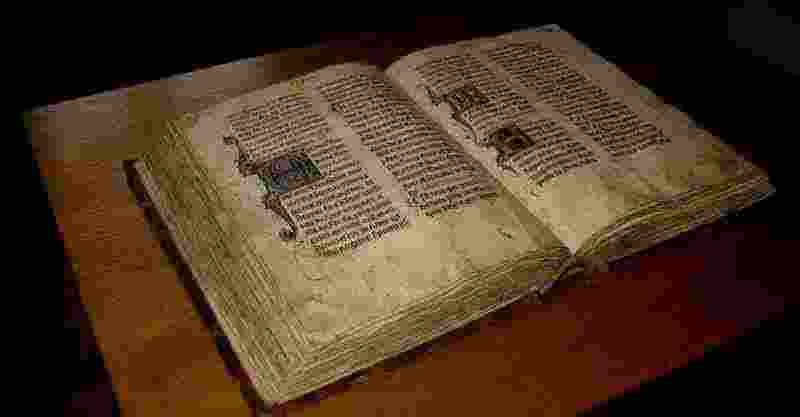
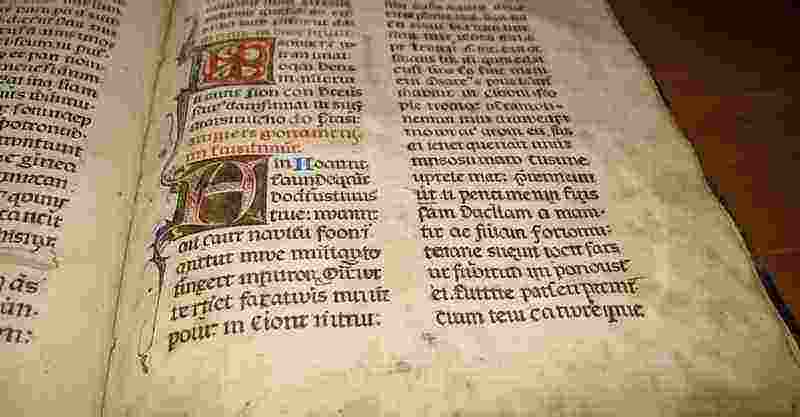
The Codex consists of forty-eight pages. At first I assumed there was no way for me to translate it, as it was wirtten with strange glyphs I hadn't seen before. But with time and with the help of a friend of mine, José Miguel, who is an amateur philologist among other things, we discovered it was written in somtheing called Gothic Script, and in an old language with tincts of latin. José Miguel knows some Latin so with a lot of effort we managed to bring some meaning out of it. I cannot say with confidence when it was written or by whom.
The manuscript is divided into eleven chapters, all following the same structure. Each chapter is clearly split into two parts.
The first part contains the notation of a song. These are rather simple melodies, and include detailed instructions for different instruments. This part is unmistakable and I have managed to interpret the music faithfully to what it is in the Codex. You can listen to them in the "Enter the Codex" page.
The second part of each chapter contains a text that appears to be connected to the song that precedes it. Together, these texts seem to form a series of stories. What remains unclear is their nature. Some passages feel historical, while others read as symbolic or even prophetic. We don't really know the full literal text, but in the "Enter the Codex" page I wrote what José Miguel and I managed to understand. There you will find also the full transcribed text. If you think you can help with the translation please reach out at the guestbook.
For now, all I can say is that the Codex Gruitcurtis seems to unite music and narrative into a single work, written with clear purpose. Whether it records real events or anticipates others yet to come is something we have not been able to determine.


HOW WAS IT FOUND
It began almost by accident.
My beloved wife Ale and I (pictured below) had not set out that morning expecting to find anything at all. The ruins of what local maps vaguely identified as the Abbaye Saint-Arnoul de Gruitcourt lay half-forgotten on a wooded rise, little more than broken stone and nettles. The monastery, we later learned, had been abandoned and dismantled in the chaos that followed the French Revolution, its stones reused, its memory slowly erased. Only the crypt remained partially intact, sealed by a collapsed arch and centuries of silence.
Curiosity, more than intention, led us down.
The air below was cold and dry, strangely preserved. Among fragments of carved capitals and fallen slabs, we noticed a narrow niche in the wall, concealed behind rubble. Inside it lay a wooden chest, darkened by age, its iron fittings corroded but intact. When we opened it, we found a manuscript wrapped in brittle cloth: thick parchment leaves, dense with ink, written in a careful but unfamiliar hand.
Unsure of what we had found, I later spoke with a teacher of mine, a man deeply versed in medieval texts. When I showed him photographs of the manuscript, his reaction was immediate and serious. He told me that, following scholarly convention, it ought to be called Codex Gruitcurtis, after the Latinized name of the place where it had been preserved. He believed the text could be slowly and methodically translated from its strange language and offered—almost with excitement—to help me begin the work.
We never got the chance.
Before any real progress could be made, he passed away suddenly. The project, so briefly alive, fell back into silence. For a time, the manuscript remained closed, as if waiting.
Eventually, unwilling to let it vanish again into obscurity, I reached out to a friend of mine, José Miguel. He was no academic, but he is an amateur philologist and knows a lot about languages. He recognized the script and knew enough Latin to recognize some words, phrases and patterns of this old text. Together, with dictionaries, patience, and many false starts, we actually began to understand the blessed manuscript.
The manuscript also had an old, but detailed and unmistakable form musical notation which I closely and precisely could bring into music. The more difficult part was the story that accompanied it: it spoke of order and disorder, of divine law and human arrogance, of cycles of collapse and restoration. It read less like a chronicle and more like a warning—part prayer, part reflection—written by someone who had lived through moral and political upheaval and feared its return. Whether it was prophecy, philosophy, or simply the anguish of its author, we could not yet say.
But one thing became clear.
The Codex Gruitcurtis was not meant to be read quickly, nor easily. It had survived destruction, revolution, and neglect, only to resurface centuries later in the hands of two people who had not gone looking for it—yet somehow had been found by it all the same.
And we both sensed that we had only begun to understand what it was trying to tell us.